
Lift Inspection
Enquire Today For A Free No Obligation Quote
At Lift Inspection, we provide professional and fully independent vertical transport assessments across the UK to ensure residential and commercial installations adhere to stringent safety criteria.
Our qualified engineers execute comprehensive audits and condition surveys that verify mechanical stability and electronic reliability.
By maintaining total regulatory independence, we provide building managers with an objective evaluation of their transit infrastructure, facilitating a safe environment for all occupants while fulfilling all national statutory examination duties.
What Is Lift Inspection and Why Is It Important for Building Safety?
Professional lift inspection acts as a mandatory structural and functional audit conducted by an independent specialist to verify the safety integrity of vertical transport assets.
This process is critical because mechanical components and safety circuits are subject to wear and electronic fatigue that can lead to catastrophic failure if left unmonitored.
By engaging in this systematic review, property owners ensure they satisfy their statutory duty under LOLER 1998, preventing hazardous incidents and protecting the organization from the legal consequences associated with regulatory non-compliance.
How Much Does Lift Inspection Cost?
The cost of lift inspection typically ranges from £200 to over £1,500, depending on the lift type, the number of floors served, and the depth of the condition survey required.
Costs are primarily influenced by the frequency of statutory examinations, the complexity of the safety systems being tested, the necessity for detailed pre-purchase reports, and the total travel time for regional site attendance.
Contact Lift Inspection to get customised prices for getting lift inspection at your property.
What Lift Inspection Services Do We Provide for Lift Systems?
We provide a full range of lift inspection services designed to meet various building, usage, and site requirements, including:
- LOLER thorough examinations – Executing statutory six-monthly or annual safety audits to satisfy national health and safety laws.
- Pre-purchase condition surveys – Providing detailed technical appraisals for prospective property owners to identify future maintenance liabilities.
- Post-installation commissioning – Verifying that newly installed systems meet original design specifications and EN 81 engineering standards.
- Compliance and safety audits – Reviewing existing maintenance records and physical assets to identify gaps in regulatory adherence.
- Supplementary testing regimes – Conducting high-level functional checks on overspeed governors and braking systems following major structural repairs.
- Insurance inspection reports – Producing objective documentation required by commercial insurers to maintain building cover validity.
Why Choose Lift Inspection for Your Property?
Choosing lift inspection from our team of independent specialists ensures that your vertical transport infrastructure receives an unbiased safety evaluation free from the conflicts of interest found with maintenance contractors.
Our approach guarantees that building owners achieve full statutory alignment with LOLER 1998, providing clear and actionable reports that distinguish between minor observations and critical safety defects.
By utilising our deep technical expertise across all major manufacturers, property managers receive a defensible audit trail that supports building insurance validity and preserves the safe movement of all occupants across the building’s levels.
Where Are Lift Inspections Required in Commercial and Residential Buildings?
A professional lift inspection is a legal prerequisite for any facility operating passenger or goods vertical transport, ranging from high-rise residential apartment blocks to clinical healthcare hubs.
These high-occupancy environments rely on independent verification to ensure that high-traffic transit routes remain mechanically and electrically secure.
By performing these audits in schools, hotels, and retail centres, building managers segregate safety risks from daily operations, maintaining a compliant infrastructure that supports the logistical demands of modern property management.
When Should Property Owners Arrange a Lift Inspection?
Property managers should arrange a lift inspection the moment a current statutory certificate expires or immediately following any significant structural modification to the transit machinery.
Prompt intervention is also vital if an installation has been involved in a mechanical incident or if occupants report unusual operational noises that suggest component fatigue.
Engaging our specialists for a condition survey prior to property acquisition or after a change in maintenance providers helps building owners mitigate financial risk and ensure the asset is fit for purpose.
How Does a Professional Lift Inspection Process Work?
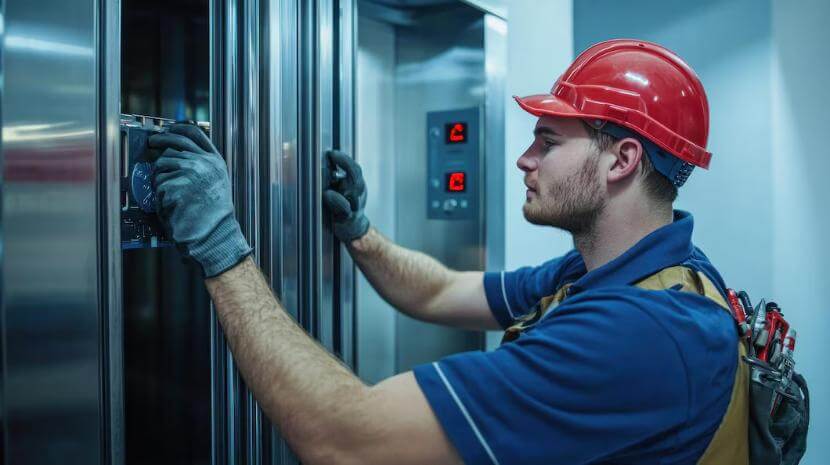
The operational workflow for lift inspection follows a rigorous engineering sequence that begins with a physical audit of the car, shaft, and machine room.
Our engineers perform functional load tests and verify the calibration of all emergency communication devices and floor-levelling sensors against EN 81 benchmarks.
Upon completion, the process culminates in the production of a formal digital report that classifies any identified technical flaws, providing property managers with a prioritized roadmap for remedial work and a legally recognized compliance certificate.
What Types of Lifts Require Regular Lift Inspection?
We inspect a full range of lift inspection categories to ensure every vertical transport system remains safe for public and professional use, including:
- Electric traction elevators – High-speed systems used in multi-storey commercial towers and residential complexes requiring biannual checks.
- Hydraulic transit units – Robust platforms commonly found in low-rise buildings that require precise monitoring of fluid seals and pumps.
- Machine-room-less (MRL) lifts – Modern, space-efficient installations where the drive mechanism is housed directly within the shaft environment.
- Disabled access platforms – Essential mobility solutions that must comply with strict DDA and Equality Act accessibility standards.
- Industrial goods lifts – Heavy-duty engineering designed for the vertical movement of warehouse pallets and high-tonne freight.
- Domestic home lifts – Private residential systems that require regular safety verification to protect occupants from mechanical entrapment.
Which Industries and Buildings Benefit Most From Lift Inspection Services?
Our lift inspection expertise supports various professional sectors by ensuring their vertical transit routes are reliable and legally defensible, featuring:
- Healthcare and NHS facilities – Maintaining uncompromising transit reliability for patients and medical equipment within clinical settings.
- Residential housing associations – Supporting the welfare of tenants by ensuring communal lift systems meet all safety laws.
- Commercial hospitality groups – Ensuring hotels and leisure venues provide a high-quality, safe passenger experience for all guests.
- Retail and shopping centres – Facilitating fluid pedestrian flow between floors to maintain professional continuity and consumer trade.
- Educational and public sector sites – Delivering robust vertical access in schools and universities to meet national accessibility standards.
- Industrial and logistics hubs – Verifying the integrity of freight lifts to prevent operational bottlenecks in the supply chain.
How Quickly Can Lift Inspection Services Be Scheduled?
Scheduling a lift inspection with our team is typically facilitated within five to ten working days for standard statutory examinations to ensure minimal site disruption.
For critical safety situations involving reported faults or building acquisition deadlines, we provide an expedited response model with site attendance often achieved within 48 hours.
This responsive approach allows facilities managers to close compliance gaps rapidly, ensuring that vertical transport systems are returned to certified service with the shortest possible delay to building occupancy.
What Safety Standards and Regulations Apply to Lift Inspections?
The regulatory framework governing lift inspection is anchored in the LOLER 1998 and the Health and Safety at Work Act 1974, which mandate independent oversight.
These laws require that all thorough examinations be performed by a competent person with sufficient practical and theoretical knowledge to detect mechanical defects.
Furthermore, all assessments align with EN 81-80 safety benchmarks, providing property owners with the rigorous technical verification needed to satisfy insurance criteria and national building control regulators.
Contact Lift Inspection for a consultation to get a professional and independent evaluation for your building’s safety.
Find More Info
Make sure you contact us today for a number of great lift inspection services.
For more information on lift inspection, fill in the contact form below to receive a free quote today.
★★★★★
Lift Inspection has been an invaluable partner in keeping our equipment safe and compliant. Their team is thorough, professional, and always on time. Thanks to their expert guidance, our lifting operations run smoothly without any unexpected downtime. I highly recommend them!
Daniel Whitmore
Greater London
★★★★★
From the first inspection, Lift Inspection impressed us with their attention to detail and deep industry knowledge. They caught potential issues before they became costly problems, saving us time and money. Their service is truly top-notch, and I wouldn’t trust anyone else!
Sophia Carmichael
Greater London